




Most Catholics understand Lent as a season of preparation. We know it’s meant to ready our hearts for Easter and for resurrection, renewal, and new life. We talk about Lent as a time of repentance, discipline, prayer, and conversion. And all of that is true. But what we almost never talk about is how unprepared we usually are for Lent itself.
More often than not, we stumble into Ash Wednesday haphazardly… picking something random or generic to give up for Lent and panic-Googling meatless recipes on Friday mornings (or whipping into the McDonalds drive thru for a quick fish sandwich… again 😅). We have good intentions, we want to be present for this season, but so many of us (including yours truly!) lack interior clarity going into this sacred time of the year. Lent arrives almost as a surprise and we scramble to catch up. One day it’s Ordinary Time, the next day there are ashes on our foreheads and the expectation to pray more, be more disciplines, and take Lent seriously this year.
And yet, internally, many of us are still tired. Still scattered. Still unsure what God is actually inviting us into. The Church, in her wisdom, knows this about the human heart. Which is why, for centuries, she gave us a season before Lent. A season that helps us prepare our hearts so that Lent can actually do what it’s meant to do. That season is called Septuagesima.
Most Catholics today have never heard of it. It’s no longer emphasized in the modern liturgical calendar, and so it’s been largely forgotten. But Septuagesima exists to help us slow down long enough to notice where we are before we try to decide where we should go. It prepares us for Lent so we can experience that season more fully. In this post, we’ll explore the roots of Septuagesima and how this gentle, preparatory season can help you enter Lent with greater clarity, intention, and openness to grace.
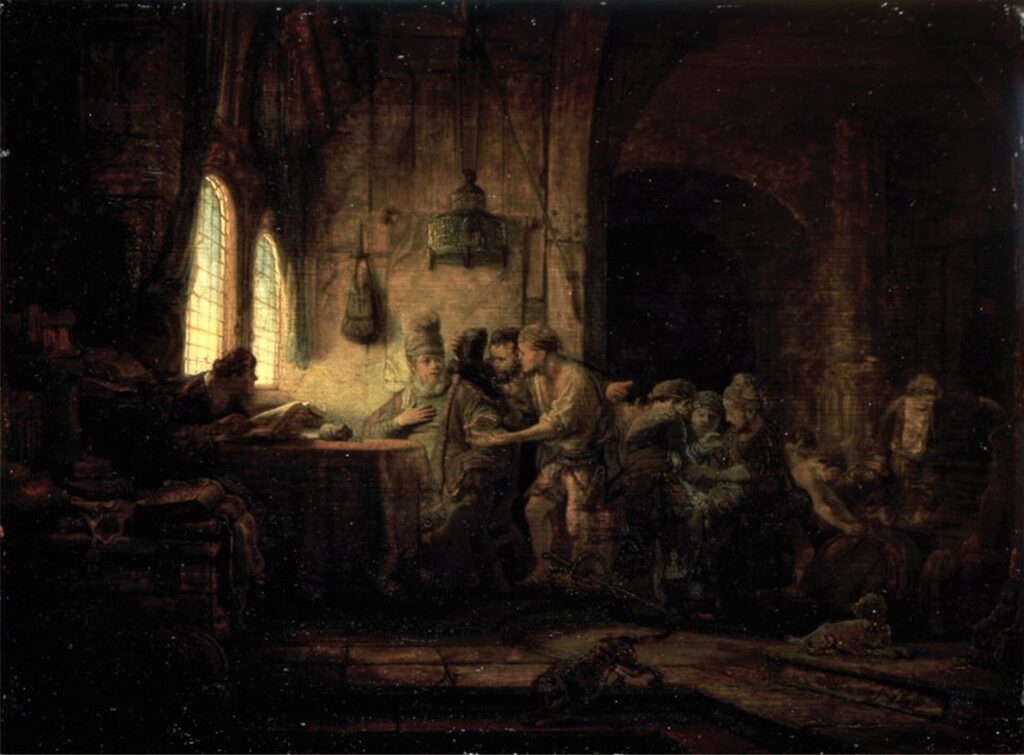
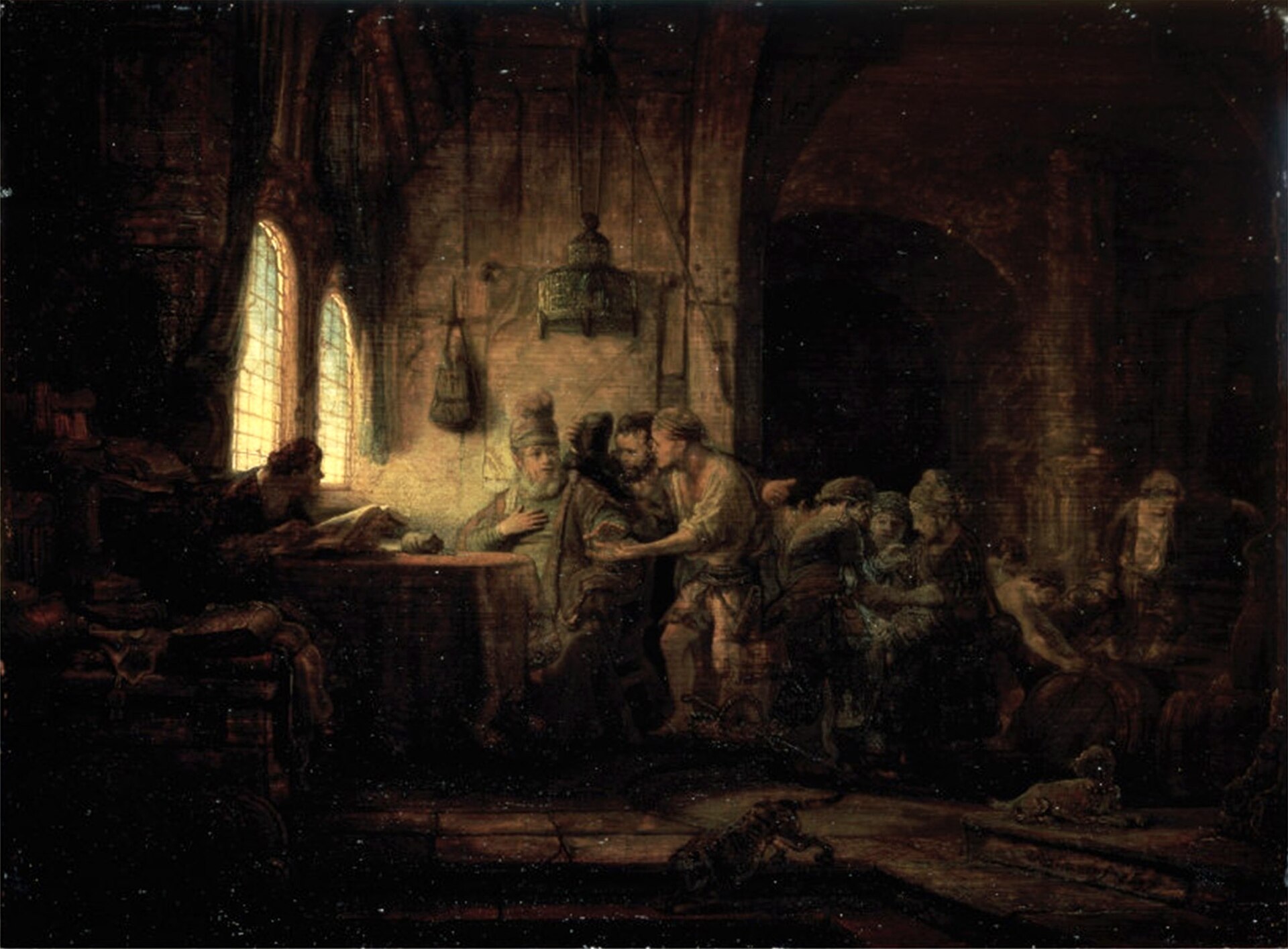
Rembrandt. The Parable of the Laborers in the Vineyard. 1637. Oil on panel. The Hermitage, St. Petersburg, Russia.
What Is Septuagesima?
The preparatory season of Septuagesima lasts seventeen days and includes the three Sundays leading up to Ash Wednesday (Septuagesima Sunday, Sexagesima Sunday, and Quinquagesima Sunday). Although the duration never changes, the calendar dates do, since everything is anchored to Easter, a movable feast that can land anywhere from late March to late April.

All three names come from Latin number roots—seventieth, sixtieth, fiftieth—meant to orient us toward Easter and the Paschal Mystery. They’re not an exact countdown but more of a symbolic way of saying, We’re getting close so let’s start paying attention.
Septuagesima was removed from the liturgical calendar during the 1969 reforms as part of an effort to simplify the Church year and draw a clearer line between Ordinary Time and Lent. Because it shared penitential elements with Lent (violet vestments, the absence of the Alleluia, and a quieter tone), it was seen as blurring Lent’s beginning, which the reforms wanted to mark more decisively with Ash Wednesday. The season was never rejected or condemned (it still exists in the Traditional Latin Mass), and for many, especially busy Catholic women, it remains a helpful invitation to slow down, take stock, and prepare the heart so we can enter Lent with intention instead of urgency.
Septuagesima and the Interior Life of a Mother
If Septuagesima feels especially relevant to mothers (and spiritual mothers!), it’s because it names something we rarely say out loud. By the time this season arrives, many of us are spiritually tired. Christmas was nice (and sometimes not that nice), but it was also a lot. Loud, demanding, and full. The decorations are down and we’re still getting used to new routines and checking in on our half-kept resolutions. Frankly, we’re exhausted. And desperately trying to hold onto our prayer lives in the margins. And yet, Lent is coming.
We want it to be different this year. More intentional. More prayerful. We secretly wish we could live like monks for those 40 days and deeply, quietly embrace everything this season is meant to be. But it’s difficult to know what that even looks like let alone live like that. We have a vague sense that Lent is about suffering and sacrifice. About giving something up. About preparing our hearts. And yet many of us are already living with very real, very heavy crosses. Chronic illness. Autoimmune disease. A frightening diagnosis. A loved one who is struggling. A marriage that feels fragile. Children who feel overwhelming or who have fallen away from the Church. Grief that still hasn’t loosened its grip. Add to that demanding schedules, constant comparison fueled by social media, the pressure to hold everything together, and the quiet fear that we’re already behind… and for many of us, life feels like one long season of endurance.
Which is why we love this idea of Septuagesima. This season reminds us that Lent is not about piling more suffering onto an already full life, nor is it about proving our seriousness through sheer willpower. Septuagesima asks us to pause before we decide what Lent “should” look like and ask a gentler, truer question instead: What is God actually asking of me right now?
So let’s do that. Grab a notebook, your favorite beverage, and let’s walk through some questions to help you surrender the “ideal Lent” for a real one.
Part One: Listen before deciding.
For many of us, the moment we realize Lent is 2.5 minutes away (how?!), we immediately jump into action making our mental lists. What should I give up this year? What would be meaningful? What would prove I’m taking this seriously? But like, what is actually doable so I don’t give up and fizzle out in week three? Before we’ve prayed, before we’ve listened, before we’ve taken stock, we’re already assigning ourselves work.
Which is totally understandable. Women are used to doing. We anticipate needs, fill gaps, and carry responsibility almost automatically. But the spiritual life cannot be a self-assignment (it worked out so well for Jonah!). We first have to pause and listen.
In the parable of the vineyard workers, the laborers do not choose their hours or decide what the work will be. They don’t negotiate or volunteer for the hardest shift. They respond when the landowner comes looking for them and invites them into the vineyard. Their faithfulness is not measured by how quickly they act, but by their willingness to answer the call.
So, rather than rushing to choose sacrifices, let’s pause and listen. Resist the urge to decide your Lenten practices based on guilt, comparison, or self-improvement goals (I know, I feel called out too 😅). Instead, let’s ask God what He is calling us to in the reality of our lives right now.
Take a few moments to reflect honestly:
- Where do I usually decide my Lent before praying?
- What sacrifices do I default to out of habit, pressure, or fear of “not doing enough”?
- What feelings surface if I imagine waiting instead of deciding right away?
- anxiety
- relief
- resistance
- uncertainty
There’s no need to resolve anything yet and we’re not making judgments here. Just notice what rises up when we stop trying to manage the season ahead.

Jules Breton, Young Woman Praying in Church, 1854
Part Two: Letting Go of Guilt-Driven Lent
Raise your hand if your Lenten season is often tangled up with comparison and performance. You know, the woman whose entire family is doing full-day fasts, homemade bread (for the entire neighborhood) on Fridays, and a color-coded prayer plan taped to the fridge (in which they will memorize a new psalm each day—starting with 119, THE LONGEST).
We feel the pressure to do more: to pray longer, fast harder, be more disciplined, take the season more seriously than we did last year. Even when our lives are already full to the brim, we assume God is asking for increased output as proof of our devotion.
This way of thinking slips in so easily because it mirrors so much of motherhood itself. We’re used to measuring our goodness by how much we carry, how many needs we meet, and how little we ask for in return. But over time, that habit can shape our image of God, too, as though His love deepens in proportion to our effort.
But God does not ask the same thing of every soul, and He does not ignore the realities of our lives. He sees your season including your health, your responsibilities, your limitations, your hidden labor, and He does not misunderstand your capacity. Faithfulness doesn’t look like overextending yourself in the name of holiness but responding honestly to His invitation.
Take a few moments to think or journal on these questions:
- When I think about Lent, what emotions rise up first?
- guilt
- pressure
- comparison
- exhaustion
- hope
- What do I assume God expects of me during Lent?
- Where did those expectations come from?
- past experiences
- comparison with others
- messages I’ve absorbed about holiness
- my own perfectionism
Again, we’re not judging here. Just noticing.
Part Three: The Right Sacrifice for This Season
Once the stranglehold of guilt loosens its grip, we can look honestly at our lives and get curious about the small, ordinary patterns that shape our days and, over time, our hearts. Most of what competes with love in our lives isn’t often a glaringly obvious sin. In fact, it often looks reasonable… necessary, even. So often it is in the little habits we use to cope with exhaustion, overwhelm, or loneliness, the things we reach for automatically because they promise relief, distraction, or a sense of control.
So, instead of asking “What should I give up?” try asking, What is slowly draining love from my life right now? Love for God, love for others, and even the capacity to be present to ourselves.
Take a few moments to reflect honestly on your real, everyday life:
- What most often steals my peace?
- What distracts me from prayer or from being present where I am?
- When I feel overwhelmed or overstimulated, what do I instinctively reach for?
- What tends to fill my time or attention but leaves me feeling emptier afterward?
As you sit with these questions, resist the urge to correct yourself or jump to solutions. We’re not jumping into the self-criticism or moral inventory boats. Consider: If I removed or limited this one thing, what space might open up for God? Would there be more silence? Patience? More awareness of your own limits?
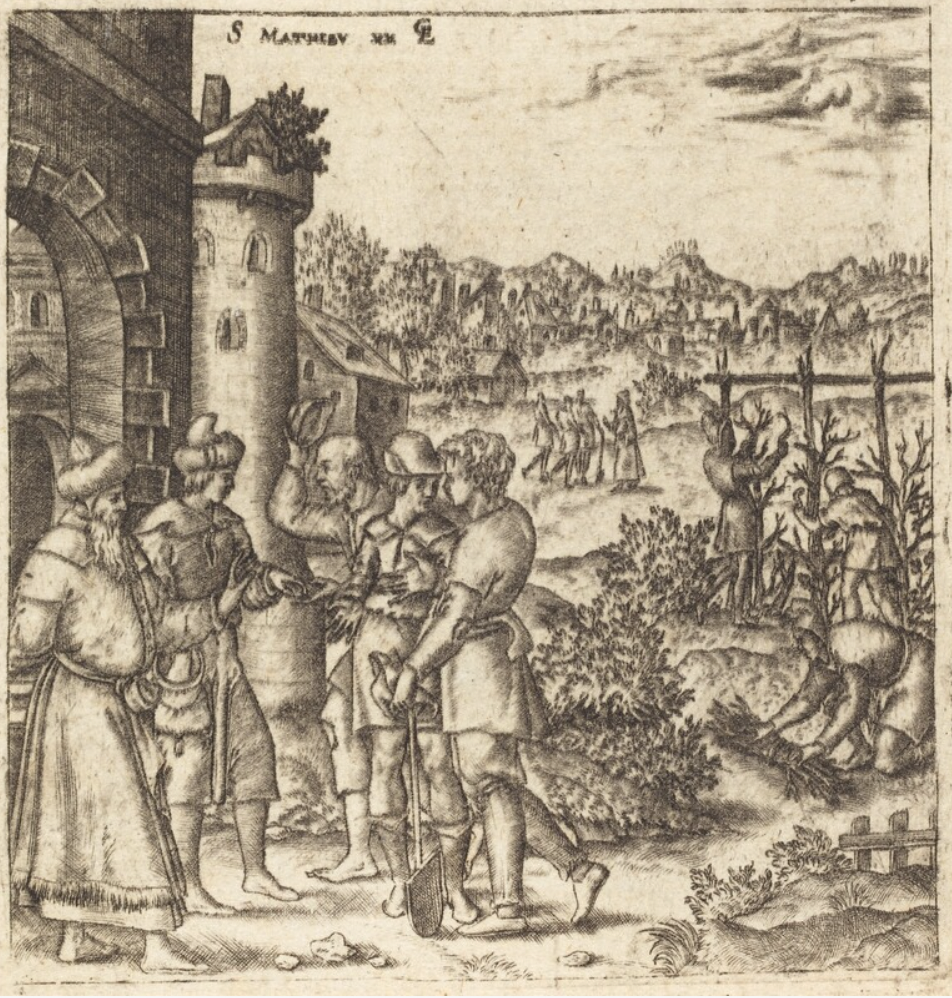
Léonard Gaultier, The Parable of the Laborers in the Vineyard, probably c. 1576/1580
Part Four: The Lent God is Calling You To
The beauty (and grace) of the parable of the vineyard workers is that not everyone works the same hours in the vineyard. And yet, each worker is met with the same generosity. God does not call us all in the same way or at the same time. He meets us where we are…not where we wish we were, not where we think we should be.
Our seasons are shaped by realities we do not control: health challenges, diagnoses, pregnancy or postpartum recovery, children with intense needs, intense seasons of waiting, demanding work schedules, caregiving responsibilities, or simply the cumulative fatigue of constant availability. When we choose our sacrifice for Lent, we want to step into what God is calling us to so we can experience conversion rather than resentment and encounter rather than exhaustion.
As you consider what to take up or give up this Lent, begin by acknowledging the truth of your current season:
- Where am I already stretched thin?
- What are the non-negotiables in my life right now?
- Where do I still have genuine freedom—of time, attention, or habit?
Then, use this simple discernment filter to guide your choice.
A good Lenten sacrifice should be:
- Specific: Clear and concrete. You should know exactly what you’re committing to or letting go of, rather than relying on vague intentions.
- Sustainable: Something that can be lived with grace, not white-knuckled through sheer willpower. If a practice immediately fills you with dread or despair, it may be asking more than God is asking.
- Revealing: A sacrifice that brings something to the surface—impatience, dependence, control, fear—so it can be met with grace rather than ignored.
- Ordered toward love: It should create space for deeper love of God or neighbor, even if that love looks quieter or less visible than you expected.
As you discern, keep this in mind: If a sacrifice feels impressive but disconnected from love, it may not be the one God is asking for. Our sweet Father is attentive to the work that opens our hearts to Him.
Part Five: Letting Prayer, Fasting, and Almsgiving Work Together
Once we’ve named what God may be inviting us into this Lent, the Church gives us a simple, time-tested structure to help us respond: prayer, fasting, and almsgiving. When practiced in isolation, these disciplines can feel arbitrary or burdensome. But when they’re integrated (read: when they’re chosen in service of the same interior work), they become supportive rather than overwhelming.
One way to approach them is to see each as addressing a different dimension of the same struggle.
- Prayer asks: Where do I need to remember God’s goodness? What truth about who God is, or how He has been faithful to me, have I forgotten or stopped trusting? Prayer becomes the place where that truth is slowly restored.
- Fasting asks: What feeds the struggle I’m trying to heal? What habits, inputs, or patterns keep reinforcing the very thing I’m asking God to change? Fasting creates space by removing what numbs, distracts, or inflames.
- Almsgiving asks: Where can love flow outward as grace grows? As God begins to heal something within us, charity naturally follows—through generosity, mercy, patience, or concrete acts of love offered according to our means.
For example, if impatience has become a constant companion, prayer might focus on remembering God’s patience with you: through Scripture, through your own story, through sitting honestly with His mercy. Fasting might mean stepping back from what overstimulates or rushes you. Almsgiving could look like choosing gentleness or presence when it costs you something (like a desire for quiet, acknowledgement, etc). Or if comparison has been draining your peace, prayer might center on gratitude for the specific life God has given you. Fasting might involve limiting the inputs that fuel comparison. Almsgiving might become intentional encouragement or generosity toward others instead of quiet resentment. By joining these three practices together, we allow our entire selves to be a gift during Lent.
Part Six: Entering Lent With Trust
If there’s one thing Septuagesima teaches us, it’s this: you are not behind. You don’t need the entire season mapped out. You don’t need a perfect plan or heroic resolve. You don’t even need certainty yet. What you need is a posture of listening and a willingness to respond as God leads.
Lent is a season of encounter with the God who knows your life, your limits, and your need for grace. Begin slowly. Stay attentive. Let your practices unfold with prayer rather than pressure. God will meet you in the hour you are able to come.
And if you’re looking for a place to walk this out more intentionally, our Lenten study, Hard Thanks, was created as a companion for exactly this kind of season. Hard Thanks is a Lenten study designed to help you practice gratitude not by ignoring suffering, but by meeting God within it. Rather than asking you to add more or try harder, it walks you through learning how to recognize God’s goodness in the places you’ve already named as heavy, tender, or unresolved. Join us for Lent, and draw closer to Jesus than you ever have before.


I’m disappointed by the reference to being unprepared for meatless Fridays. According to the RCC, we are (a) called to make some sacrifice every Friday to honor the day Our Lord sacrificed everything for us and (b) encouraged to give precedence to abstaining from meat.
If you’re a vegetarian or can’t afford meat anyway, then another sacrifice would be okay, but the best and most highly recommended one is abstaining from meat EACH AND EVERY FRIDAY.
It is only REQUIRED during Lent. But Our Lord didn’t suffer and die in the flesh because he was REQUIRED to do so!
Thank you for your thoughtful comment, Christine! It’s clear you’re coming from a real love for the Church and a desire to honor Our Lord well. You’re absolutely right that Friday penance has deep meaning, and abstaining from meat has a long and beautiful place in our tradition.
At the same time, the Church also recognizes a variety of legitimate ways Catholics may live out Friday sacrifice outside of Lent, depending on circumstance and pastoral guidance. Our intention was never to downplay abstinence, but to acknowledge that many people are still learning how to enter into Friday penance thoughtfully and consistently. We try to speak pastorally to busy moms and spiritual mothers who are still growing into these practices! The goal isn’t perfection, but formation helping women remember Friday as a day of sacrifice and take a sincere step, even when they’re not there yet.
We’re so grateful for your reminder of why Friday matters so much and for the charity with which you’re calling others deeper into that tradition. God bless you!